


Karolina Szwed
b. 1997, Bielsko-Biała
Painter. She graduated from the Academy of Fine Arts in Katowice in 2022. Her paintings emerge through experimentation, intuition, and the repetition of gestures. They explore themes of solitude, existential reflection, and trauma. Drawing on handwriting, scribbles, and spontaneous note-taking, the artist transforms fleeting traces and remembered movements into painterly forms. She is not interested in documenting reality or producing literal representations of what she sees. Instead, her focus lies in preserving the traces of memory, the creative process, and the chance occurrences that arise along the way. She lives and works in Warsaw.
no title (singing through a window)
FSP ING 0295
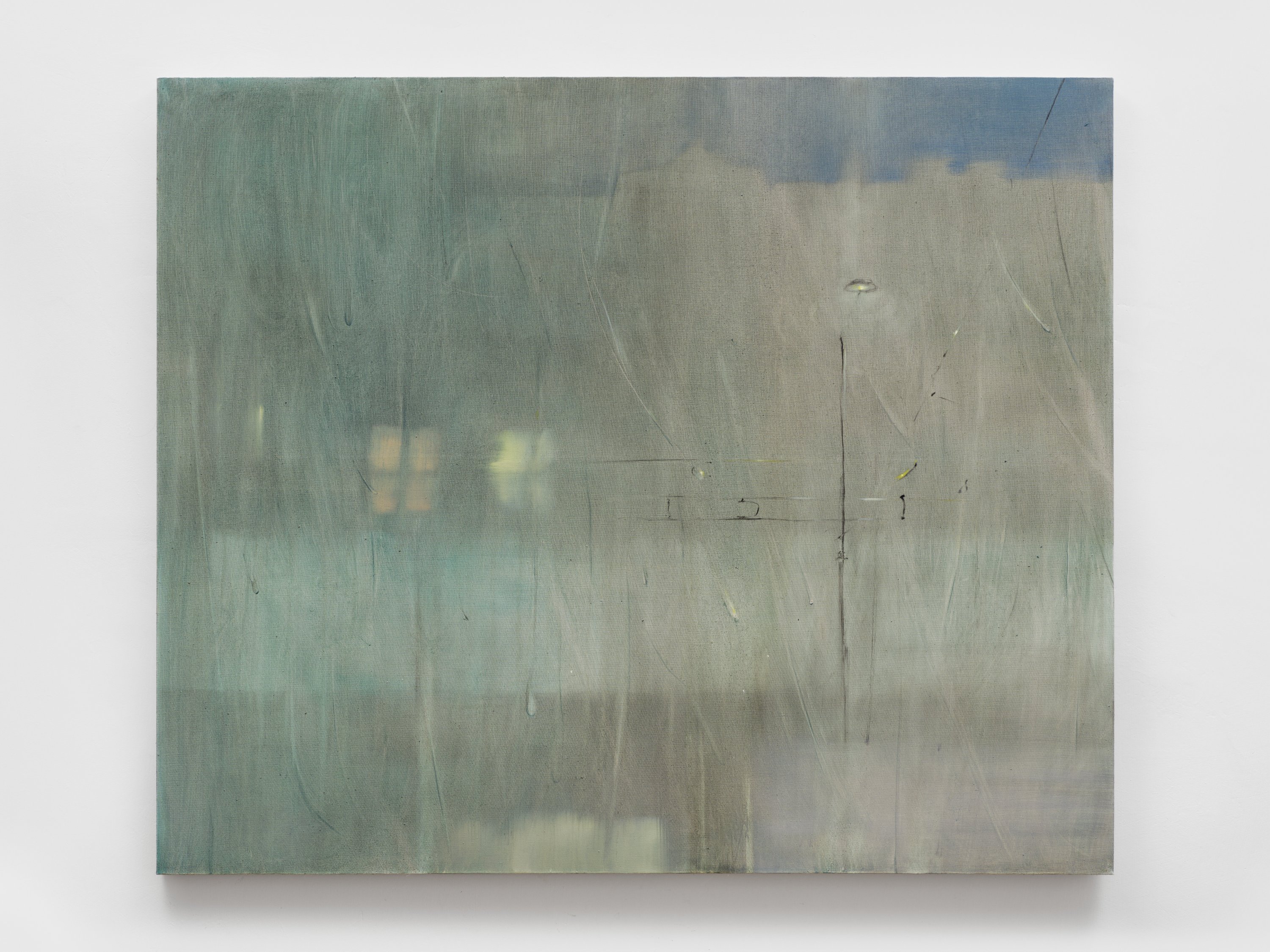

The painting emerged from the artist’s observations of the city from her former studio on Aleje Jerozolimskie in Warsaw. In the windows of the building opposite, the façade housing her studio was reflected, creating overlapping images of reality and its mirror image. She was particularly interested in the experience of seeing the very place she occupied while being unable to perceive her own presence within it. This feeling of being simultaneously present and absent became the starting point for the work. Rather than depicting a specific view, the painting serves as a record of memory and impressions. Fragments of architecture, reflections in glass, tram wires, rain, and rhythmic marks resembling a sound recording appear throughout the composition. The title refers to the need to affirm one’s presence and to the attempt to establish contact with someone on the other side of the windowpane. Here, singing becomes a simple gesture directed outward, reaching beyond oneself.
Cue sports
FSP ING 0294
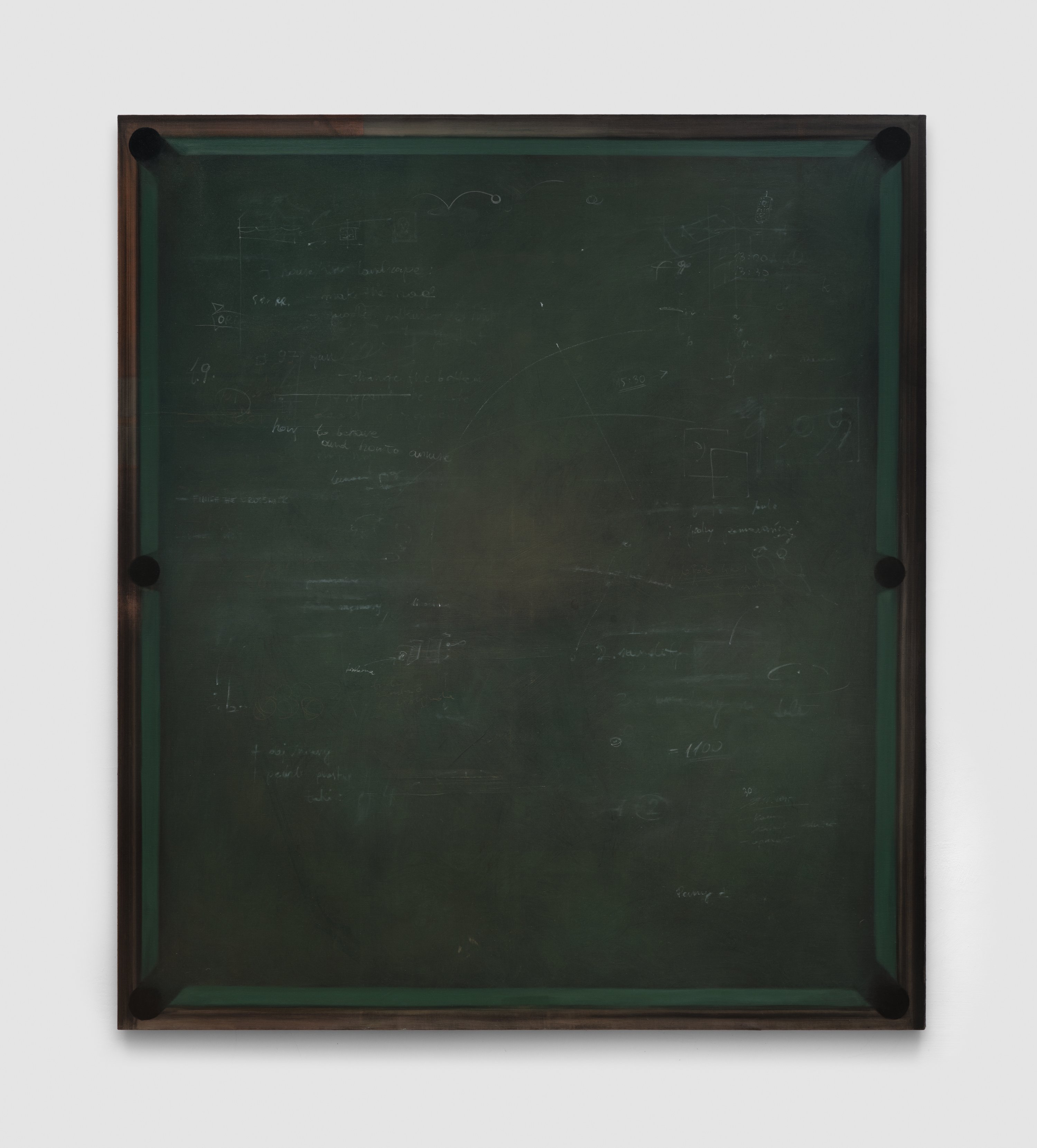

Cue Sports originated from the artist’s desire to preserve the notes she creates while working. Her studio is filled with sheets of paper covered in ideas, sketches, and reminders. Although these notes often serve as starting points for new paintings, she does not wish to present them as artworks in their own right. Instead, she created a painting that functions as a kind of board onto which traces of this process could be transferred and retained. The surface of the work became a diary or archive of several months spent in the studio. It contains the titles of other paintings, quotations, and everyday organisational notes. Some of these inscriptions have been erased, while others survived by chance, forming an authentic record of time passing and of the creative process itself. The composition balances between associations with a classroom blackboard and a billiard table, deliberately merging these two references. The title likewise remains open to interpretation, referring both to sports played with a cue and to cues, signs, or traces left behind on the board’s surface.